


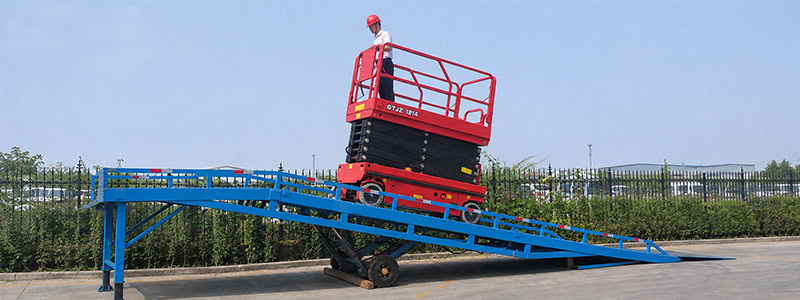
Scissor lift safety rules start before anyone steps onto the platform: check the machine and ground, identify overhead hazards, plan the work and make sure a trained person can operate the controls and call for help. While working, keep the gate closed, stay within the platform capacity and follow the lift’s instructions for positioning, travel and outdoor use.
The following guide walks through a typical job from the first inspection to parking the lift. It also explains what to do when an alarm sounds, why a harness may be required, and how ground personnel can help in an emergency.
Only Trained Operators Should Use a Scissor Lift
An operator should know how to drive a scissor lift where its design permits travel, raise and lower the platform, stop the machine and recognize unsafe conditions. Training also needs to cover load limits, overhead hazards, defect reporting and the site’s rescue arrangements. Familiarization with the controls and operating instructions of the machine being used helps the operator apply that training on the job.
Scissor lift training requirements depend on the jurisdiction and the work. In U.S. construction, the scaffold training rule addresses the hazards and procedures relevant to workers using and operating the equipment. Site-specific instruction is especially useful when an operator moves from an open work area to a busy warehouse or an unfinished construction site.
Inspect the Scissor Lift and Work Area Before Use
A pre-use check connects the condition of the lift with the job ahead. Walk around the machine, examine the work area and test the functions required by the manufacturer. The following table is a practical starting point; use the equipment’s inspection instructions for the full check.
| Check | What to look for | If there is a problem |
|---|---|---|
| Platform, guardrails and gate | Damage, loose components, a gate that will not close or latch. | Keep the lift out of use and report the defect. |
| Scissor lift controls | Platform and ground controls, emergency stop and the indicated functions, tested as instructed. | Do not use a lift with a safety-critical control fault. |
| Hydraulics and structure | Visible leaks, damaged hoses or structural damage. | Stop and report the problem for assessment. |
| Tires or tracks | Visible damage and other abnormal conditions. | Report the condition before using the lift. |
| Ground and route | Holes, trenches, debris, slopes, weak surfaces, traffic and pedestrians. | Remove the hazard or select a safe route and position. |
| Overhead area | Beams, pipes, electrical lines and obstructions along the travel and lift path. | Reposition or arrange appropriate controls before work. |
| Rescue arrangements | Ground personnel know the emergency controls and the site rescue procedure. | Resolve the gap before raising the platform. |
If an inspection reveals a defect that affects safety, remove the lift from service and report it for assessment. Keep it out of use until the problem has been addressed; do not bypass a safety device to finish the job.
Check Ground Conditions and Tilt Protection
A level-looking surface can still conceal a problem. For example, a lift installing an outdoor sign may travel across paving and stop near a trench. The operator needs to consider the route, the final working position and whether the ground can support the machine and its load. Check for openings, trench edges, covers, slopes and recently backfilled ground before moving or raising the platform. Where outriggers are required, deploy them as instructed and use suitable support where needed.
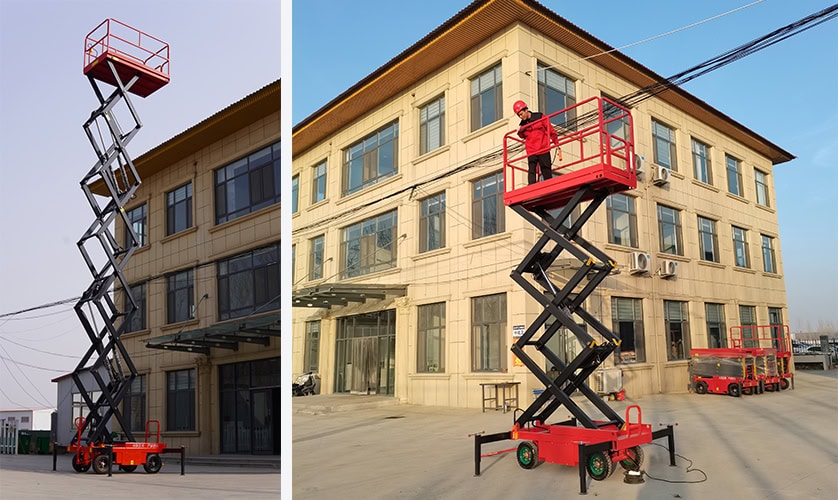
A plataforma elevatória tipo tesoura sobre esteiras can be considered for an outdoor job where a tracked configuration suits the work. Plan the route and work position by examining surface support, trench edges and other changes in the ground.
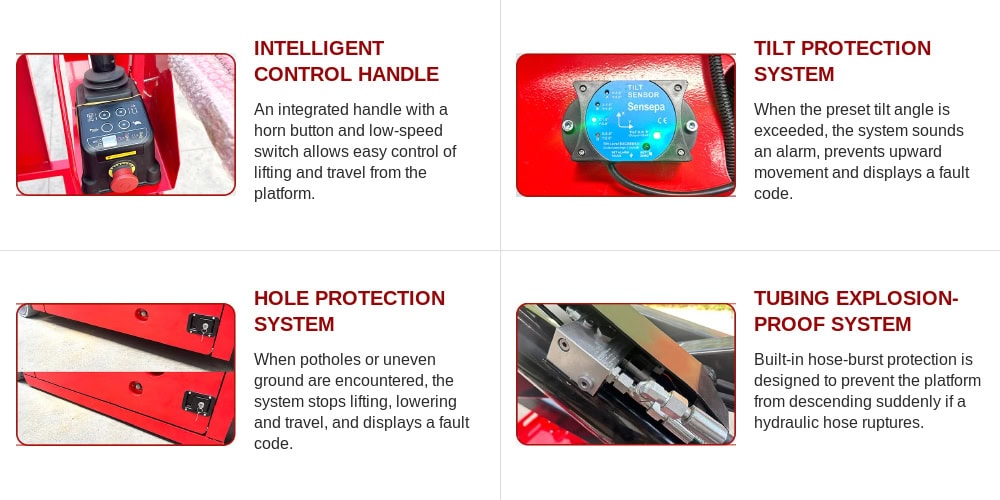
The Huajing GTJZ-6 includes tilt protection. A tilt protection system can warn the operator when the machine exceeds a preset angle; some systems also inhibit further ascent. If an alarm sounds, stop the operation, keep people clear and follow the machine’s instructions to return the platform to a safe condition and address the ground position. Do not override the warning.
The GTJZ-6 also includes automatic pothole protection. Check that the protective components are in good condition and operate as specified during the pre-use inspection. The system is a safeguard; checking the travel path for holes and obstacles is still essential.
Move and Position the Lift Safely
In a warehouse, a maintenance worker may need to reach several ceiling lights while forklifts and pedestrians use nearby aisles. Before moving a self-propelled scissor lift, check the whole route and coordinate with traffic. Use barriers, signs or a ground guide where appropriate, and keep people away from areas exposed to moving equipment or falling objects.
Lower the platform before traveling unless the manufacturer permits elevated travel under the conditions at the site. Follow the machine’s restrictions for speed, ground and slope. A plataforma elevatória móvel tipo tesoura may require a different positioning procedure; move and secure it according to its instructions. Where an external power cable is used, route it away from traffic and protect it from being trapped during positioning.
Look for Overhead Obstructions and Electrical Hazards
Prevent Crushing Against Beams and Pipes
Before raising the platform to replace a warehouse light, look not only at the fixture but also at the beams and pipes around it. As the platform rises, the space between the operator, the controls and a fixed structure can close quickly. Position the lift to maintain a clear working space, approach carefully and keep the platform floor clear so the operator can work without leaning or losing balance.
Huajing platform controls can integrate lift and travel functions in one control unit. Before work, identify the controls and emergency stop; the ground team should also know where to find the ground controls and how the rescue plan works. Platform controls and ground rescue controls serve different purposes.
Keep a Safe Distance from Electrical Hazards
Check the work area and travel path for power lines and other electrical equipment. Electricity can arc, so contact is not the only danger. Keep the lift, workers and materials at the distance required for the voltage and task under applicable rules. If work must take place near energized equipment, arrange the required electrical controls and qualified personnel before approaching.
Use Guardrails and Follow Fall Protection Requirements
Guardrails help keep people inside the platform. Before lifting, check that the rails are intact and the gate or chain is secured. The Huajing GTJZ-6 has a self-latching gate; check that it has closed and latched after entry. Stand on the platform floor, keep the work within reach and do not sit or climb on the rails.
Do You Need a Harness in a Scissor Lift?
Fall protection is required, but a personal harness is not automatically required in every scissor lift situation. In the United States, properly installed guardrails provide the required fall protection for conventional scissor lifts in many applicable circumstances. Additional personal protection may be required by the applicable regulation, the manufacturer, the employer or the site risk assessment. Other countries can have different rules.
Where a harness or other personal fall-protection system is required, use the type specified for the job and connect it to an appropriate manufacturer-designated anchorage. Follow the equipment and site instructions; do not assume any part of the guardrail is an approved anchor point.
For example, Brazil’s NR-18 construction standard requires platform occupants to use a personal fall-protection system connected to the manufacturer-designated anchorage.
Can You Put a Ladder on a Scissor Lift?
Do not place a ladder, box or other improvised support on the platform to gain height. Select equipment that can reach the work from the platform floor. Where the machine has an extendable deck, positioning and extending it according to the instructions can help bring the work within reach while keeping both feet on the platform.
Stay Within Platform Load and Occupancy Limits
Count everything that will be on the platform: the workers, their tools, materials and any other equipment. Compare the total with the rated capacity and follow the allowed number of occupants. For a platform extension, check whether the extension has its own load limit and distribute the load as the machine instructions specify.
Consider the shape of the load as well as its weight. Long panels can obstruct the controls or make it harder to work inside the guardrails. Plan how materials will be delivered to the platform and kept secure without obstructing the operator or gate.
Check Wind and Weather Before Outdoor Work
Confirm that the lift is rated for outdoor use and follow its wind and operating limits. Wind can affect an elevated platform, and large panels or other broad materials can present more surface area to the wind. Monitor changing conditions and stop work when conditions exceed the equipment or site limits. Lightning and other severe weather can also make work unsafe.
Know What to Do During a Malfunction
If the lift stops, an alarm sounds or the operator cannot descend, stop the task and contact the designated ground personnel. Follow the site rescue plan and the machine’s emergency instructions. Ground personnel need to know the location and operation of the ground and emergency lowering controls before work begins; a rescue plan is most useful when the team has practiced it, as UK HSE guidance explains.
The Huajing GTJZ-6 includes hydraulic hose-burst protection and an emergency lowering system. These are separate safety functions. After a hydraulic fault, report the problem and keep the machine out of service until it has been assessed and repaired.
Park and Secure the Lift After Use
When the job is finished, lower the platform and park the lift in the designated location according to the manufacturer’s instructions. Secure the controls against unauthorized use. If the machine is to be charged, follow its charging procedure and protect the cable from damage or traffic. Report any defect noticed during the shift so the next operator does not discover it only after starting work.
OSHA Scissor Lift Safety Requirements
For U.S. workplaces, OSHA addresses many scissor lifts under scaffold-related provisions, with different rules applying to construction, general industry and shipyards. The following overview is a starting point for the relevant work, not a substitute for checking the applicable standard. OSHA’s scissor lift guidance links to the relevant provisions.
| Topic | What OSHA addresses |
|---|---|
| Training | Relevant hazards, proper use and material handling; construction scaffold training is addressed in 29 CFR 1926.454. |
| Fall protection | Guardrail requirements and related fall-protection provisions applicable to the work. |
| Stability and positioning | Safe location, ground conditions, movement and separation from other traffic. |
| Overhead and electrical hazards | Positioning to avoid crushing and electrical hazards; applicable electrical rules depend on the work. |
| Inspection and maintenance | Controls, guardrails and other safety components should be inspected and maintained according to applicable requirements and manufacturer instructions. |
If you have questions about scissor lifts or need help choosing the right platform for your work, please contact Huajing.